
-
Elroy Hub, Kugeria Rd
Off Kiambu Rd
-
+254 707 767 453
ask@nurutrust.africa
Demand for civic space holds strong across Africa as supply of freedoms wanes
By: Nicholas Njau
Comments: 0
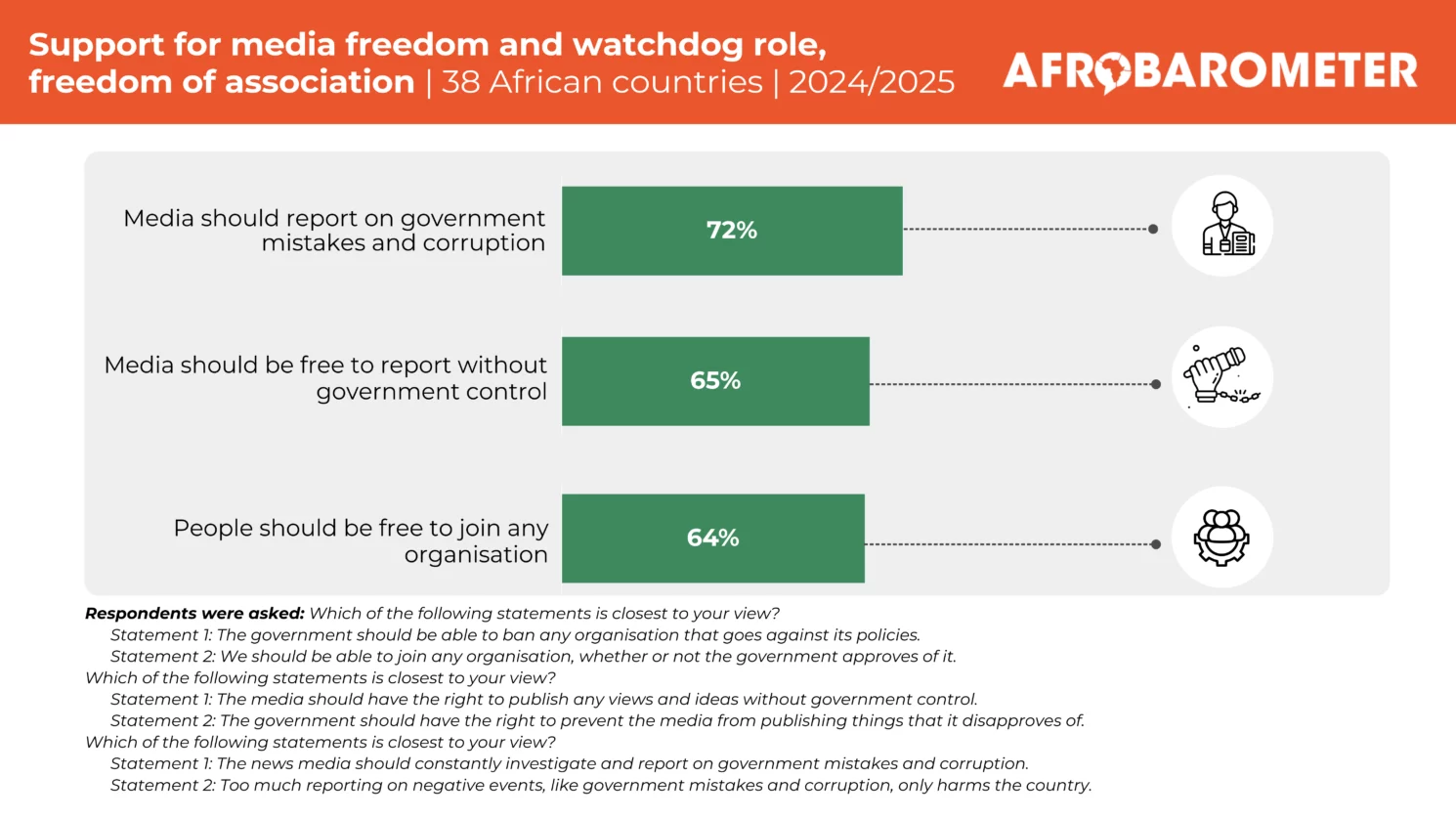
Africans broadly express support for their right to join any organisation and for the media’s freedom from censorship and its responsibility to report on government mistakes, the latest Afrobarometer Pan-Africa Profile shows.
Yet their experience of these freedoms is highly uneven and, in many contexts, eroding, increasingly constrained by the very governments that are formally committed to protecting them. The new report, based on 50,961 interviews across 38 African countries in 2024/2025, shows that while many citizens say they can associate freely and vote without pressure, only 13 of the countries have majorities who feel “completely” free to say what they think.
Perceived freedom of speech has declined over the past decade, and only a slim majority of Africans consider their media free. Read more

Africa’s civic tech moment
By: Nicholas Njau
Comments: 0
Bridges are universal. They connect places, people and times. More than just physical structures, bridges symbolise connection, transition, and progress. Civic tech plays a similar role in reshaping the relationship between people and their governments. At its core, civic tech uses digital innovation to bridge systematic gaps, and enable a participatory, transparent and accountable governance.
In Africa, digital tools are being used to monitor elections, track service delivery, and enable participatory budgeting. For Code for Africa (CfA), the continent’s largest network of civic technology and data journalism labs, digital tools are indispensable. With teams in more than 20 countries, CfA builds digital democracy solutions that give citizens access to actionable information, ranging from fact-checking tools, county-level data dashboards, to apps that visualise the gender pay gap. Read more

African Universities Shine At Huawei ICT Global Final
By: Nicholas Njau
Comments: 0
African universities delivered one of their strongest performances yet at the 10th Huawei ICT Competition Global Final, with Nigeria securing two Grand Prizes, Kenya claiming its first-ever Grand Prize, and Egypt and Algeria emerging among the competition’s top-performing countries.
The competition, held in Shenzhen on June 9, attracted more than 220,000 students and faculty members from over 2,000 institutions across more than 100 countries and regions. Following national and regional rounds, 177 teams from 49 countries and regions advanced to the global final.
Nigeria emerged as one of the standout performers, winning two Grand Prizes, two First Prizes, and a Second Prize across the Network, Cloud, Computing, and Innovation tracks. Read more

Madina Kimaro: Empowering young minds to protect the planet
By: Nicholas Njau
Comments: 0
“Clean sand, charcoal, stones, and cotton. If you have these items at home, you can make a simple water filter!”
In a classroom at Mtongani Primary School in Dar es Salaam, a quiet anticipation fills the air. Dozens of children lean forward, eyes fixed on the demonstration unfolding before them. For a brief moment, it feels like magic.
But what Madina Kimaro is showing them is not a trick. It is proof that solutions can be built from everyday materials and that children, at any age, can be part of making change.
This belief sits at the heart of Madina’s work. For her, children are not only vulnerable to the impacts of climate change; they are central to solving it.
“Climate change affects everyone,” she says. “But it does not affect everyone equally. Children are often the most impacted, yet they are rarely given the tools, knowledge, or space to act.” Read More
African Union Commission and UNHCR Kicks Off 9th Livingstone Syllabus Training to Advance Humanitarian Governance Across Africa
By: Nicholas Njau
Comments: 0
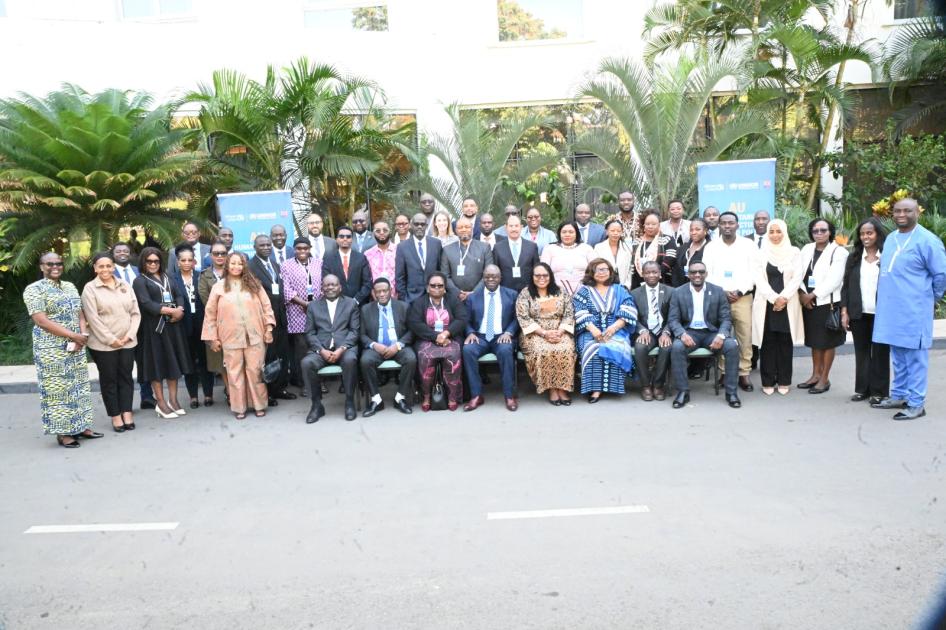
The African Union Commission (AUC), through its Department of Health, Humanitarian Affairs and Social Development (HHS), on 3 June 2026, convened the 9th African Union Humanitarian Architecture: Law and Policy Training Programme (Livingstone Syllabus) in Lusaka, Zambia, under the theme: “Strengthening Humanitarian Governance and Advancing Protection and Solutions in Africa.”
The Livingstone Syllabus remains one of the African Union’s flagship capacity-building initiatives, designed to strengthen Member States’ understanding and implementation of African and international humanitarian law and policy frameworks. Since its establishment in 2016, the programme has played a significant role in enhancing the capacity of policymakers, practitioners, and humanitarian actors to address forced displacement, protection challenges, and humanitarian crises across the continent.
The 9th Session is being held at a time when Africa continues to face complex and evolving humanitarian challenges driven by conflict, disasters, climate-related shocks, food insecurity, and large-scale displacement. These realities underscore the need for strengthened institutional capacity, effective humanitarian governance, and durable solutions that place affected populations at the centre of humanitarian action. Read more
Empowering faith leaders for advocacy in Africa
By: Nicholas Njau
Comments: 0
A workshop in Tanzania provides information and tools for effective advocacy in gender and climate justice
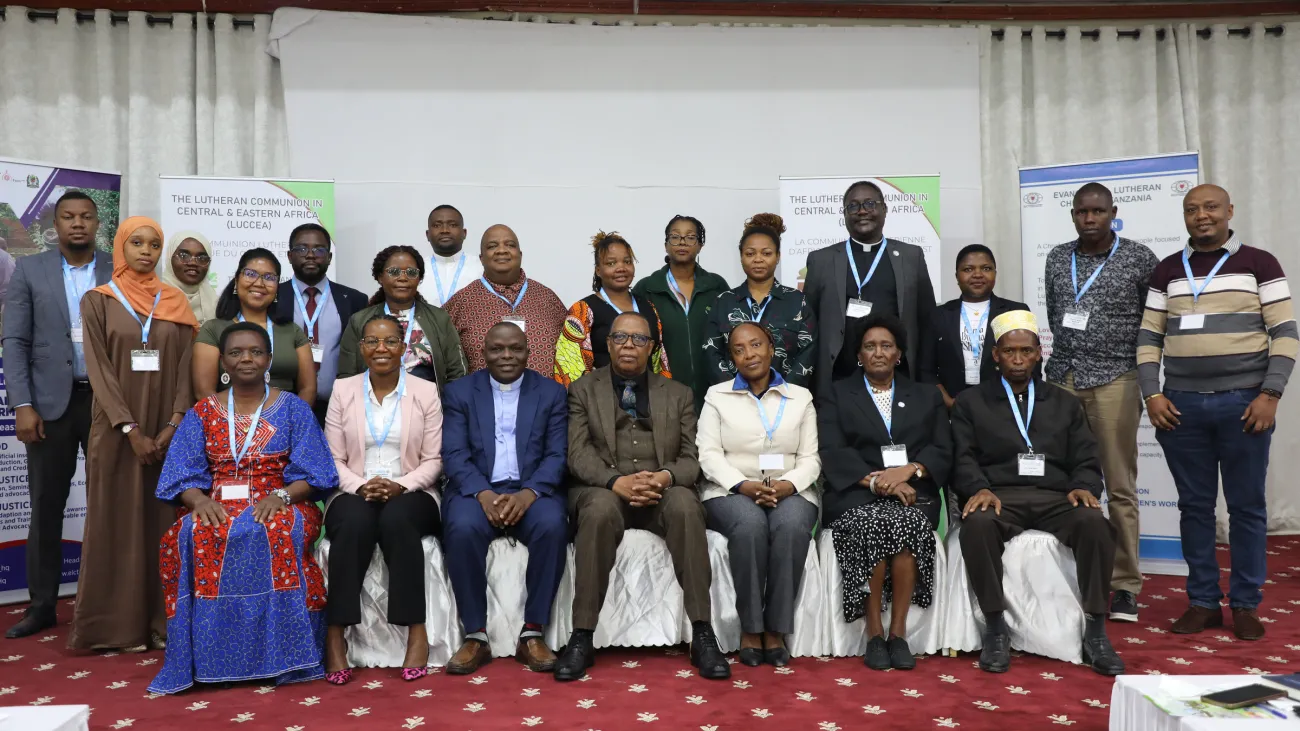
(LWI) – Empowering faith leaders in Africa to engage in more effective advocacy for human rights, gender justice and climate action across the continent: that was the goal of a four-day workshop organized recently by the Lutheran World Federation (LWF) and the Evangelical Lutheran Church in Tanzania (ELCT).
The 26 to 29 May event brought together church leaders, interfaith partners, government representatives, United Nations (UN) officials and members of civil society organizations to strengthen understanding of regional and global human rights systems. It provided participants with practical skills and tools to engage with mechanisms such as the Universal Periodic Review (UPR), the UN Framework Convention on Climate Change, the Convention on the Elimination of All Forms of Discrimination against Women (CEDAW) and other UN processes.
Participants discussed growing concerns over shrinking civil society space, increasing pushback against women’s rights and threats facing environmental defenders in Africa and beyond. The workshop examined case studies from the African continent, including the Tanzanian church’s recent coordination of a UPR report sent to the UN High Commissioner for Human Rights and a CEDAW country report detailing barriers to women’s empowerment. Sessions explored African human rights systems, while also looking at advocacy opportunities within global climate processes. Read more

Experts push urgent action on Africa’s water and sanitation crises at African Academic Heritage Fair 2026
By: Nicholas Njau
Comments: 0
The Association of African Universities Television (AAU TV), under the auspices of the Association of African Universities (AAU), has held the 2026 edition of the African Academic Heritage Fair (AAHF) in Accra.
The event, organised as part of activities marking African Union Day, brought together university leaders, researchers, students, policymakers, development partners, and youth groups from across the continent.
Held under the theme, “Sustainable Water Availability and Safe Sanitation: The Role of Higher Education in Achieving Agenda 2063,” the fair focused on strengthening the role of African universities in addressing water insecurity, sanitation deficits, and climate resilience challenges.
Speaking at the event, the Country Representative for Ghana covering West and Central Africa at the International Water Management Institute (IWMI), Professor Kehinde Ogbunjobi, raised alarm over the continent’s worsening water and sanitation crisis. Read more
AD1187: Amid gloomy economic outlook, Namibian youth identify unemployment as the country’s most urgent problem
By: Nicholas Njau
Comments: 0
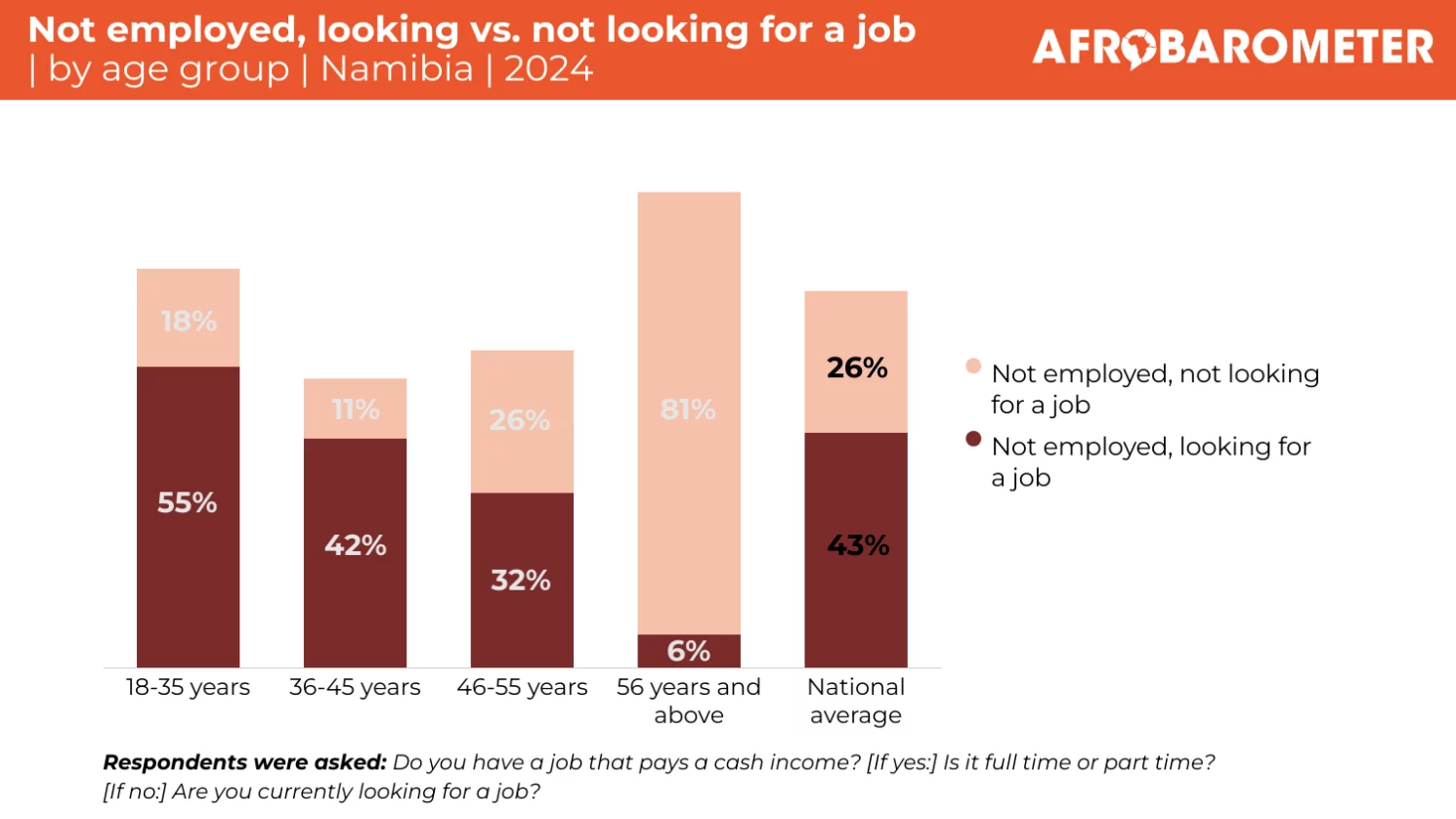
About 70% of Namibia’s 3 million people are under the age of 35 (World Bank, 2026; Itana, 2025). While mining, agriculture, tourism, and other sectors of the economy have recorded substantial progress since independence in 1990, unemployment – currently estimated at 36.9% – has been a persistent problem (World Bank, 2026). The challenge is especially acute for youth: According to the most recent labour force survey, conducted in 2023, unemployment among 15- to 34-year-olds stood at 44.4%, a figure that rises further in economically marginalised regions as well as if “discouraged workers” are added (Namibia Statistics Agency, 2023; Ndjavera, 2022; Tendane, Hartman, & Alberts, 2023). A recent survey by the Active Youth Organization (AYO), a youth-led organisation focused on the United Nations (UN) Sustainable Development Goals, reinforces these findings, with 85% of young respondents reporting frustration over unemployment, 72% citing limited access to education, and 68% expressing concern about inadequate resources (Itana, 2025).
Both government and nongovernmental actors have invested in youth empowerment. Alongside local partners such as the AYO, the United Nations Development Programme has supported initiatives connecting young Namibians to training, funding, and regional networks (Itana, 2025). The UN recognised Namibia as a “Pathfinder Country” for the Global Accelerator Programme in 2023, leading to the development of a national roadmap focused on employment creation, youth entrepreneurship, social-protection expansion, and economic formalisation (African Peer Review Mechanism, 2025). Read more

Youth-led enterprises must be at the heart of Africa’s value chain revolution
By: Nicholas Njau
Comments: 0
Addis Ababa, 22 May 2026 – “Africa will not transform itself without its youth, and Africa’s youth will not transform the continent without opportunities.” This was the central message from Ms. Eunice G. Kamwendo, Director of the Economic Commission for Africa’s Subregional Office for Southern Africa, during a pre-Africa Development Impact Forum webinar held on 14 April 2025 on the theme “Unlocking Regional Value Chains: Empowering Youth-Led Enterprises in Africa to Thrive Under AfCFTA“.
Organized by ECA SRO-SA in collaboration with the Southern Africa Youth Forum, the webinar brought together policymakers, private-sector representatives, youth organizations, entrepreneurs and development partners to examine how the African Continental Free Trade Area can become a practical engine for youth entrepreneurship, industrialization and job creation. Read more
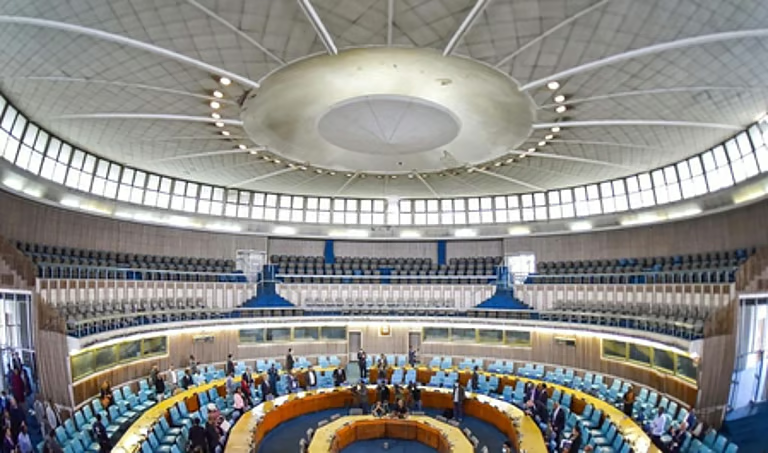
Experts discuss overcoming Africa’s challenges at UN forum
By: Nicholas Njau
Comments: 0
Addis Ababa, May 11 (IANS): United Nations (UN) experts and officials have called for new policy approaches that place social inclusion, resilience and regional integration at the heart of Africa’s development strategies to overcome inequalities, youth unemployment and accelerating climate threats.
They made the call at a high-level global policy dialogue, themed “Africa’s Development Pathways in a Fragmenting World,” which was convened by UN Department of Economic and Social Affairs, in collaboration with the UN Economic Commission for Africa (UNECA) on Friday in the Ethiopian capital of Addis Ababa. Read more